
As part of the FAVORIT+ project, the definition of the future FAV-HUB was developed through three complementary consultations organised between 13 March and 4 April: a workshop with interested urban stakeholders, a workshop with pupils from Orizont School and a workshop with residents and the Favorit community. Together, these consultations aimed to ground FAV-HUB as a useful, accessible and relevant space for the community, connected to the project’s core themes: energy transition, sustainable materials, digital solutions, urban experimentation and local engagement.
FAV-HUB is conceived as a proximity infrastructure that connects the technical component of the FAVORIT+ project with the everyday life of the neighbourhood. The future centre should provide a framework for testing sustainable solutions, educational activities, collaboration, co-creation, community meetings and dialogue between residents, specialists, institutions and public administration.
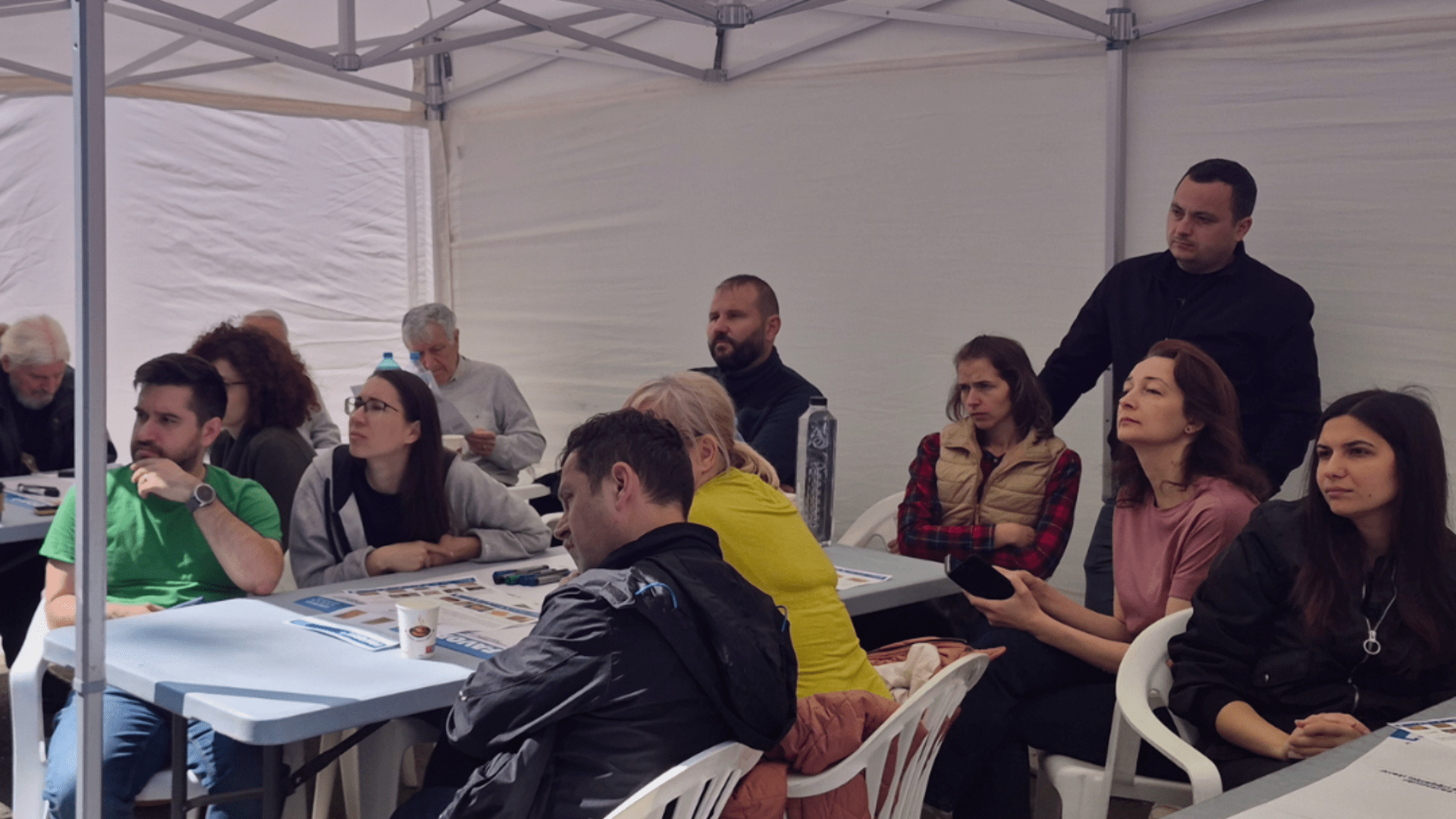
The first workshop, organised on 13 March, , was dedicated to interested urban stakeholders:NGOs, community associations, architects, urban planners, specialists, representatives of academia and civic initiatives. The meeting aimed to test the initial vision for the hub and clarify possible functions, user categories, required facilities and governance models. The results outlined FAV-HUB as a hybrid neighbourhood space, rather than a purely technical infrastructure. Participants supported the idea of a centre that combines community, educational, civic, creative and experimental functions.
Community, educational, civic, creative and experimental functions were proposed: apartment block meetings, neighbourhood debates, activities for pupils and students, workshops, co-working, urban gardening, intergenerational activities and the testing of solutions related to energy or sustainable materials. In terms of operation, participants supported the idea of a modular, flexible and accessible hub, managed through a mixed or hybrid model based on collaboration between the local administration, a programming operator, institutional partners and the community.
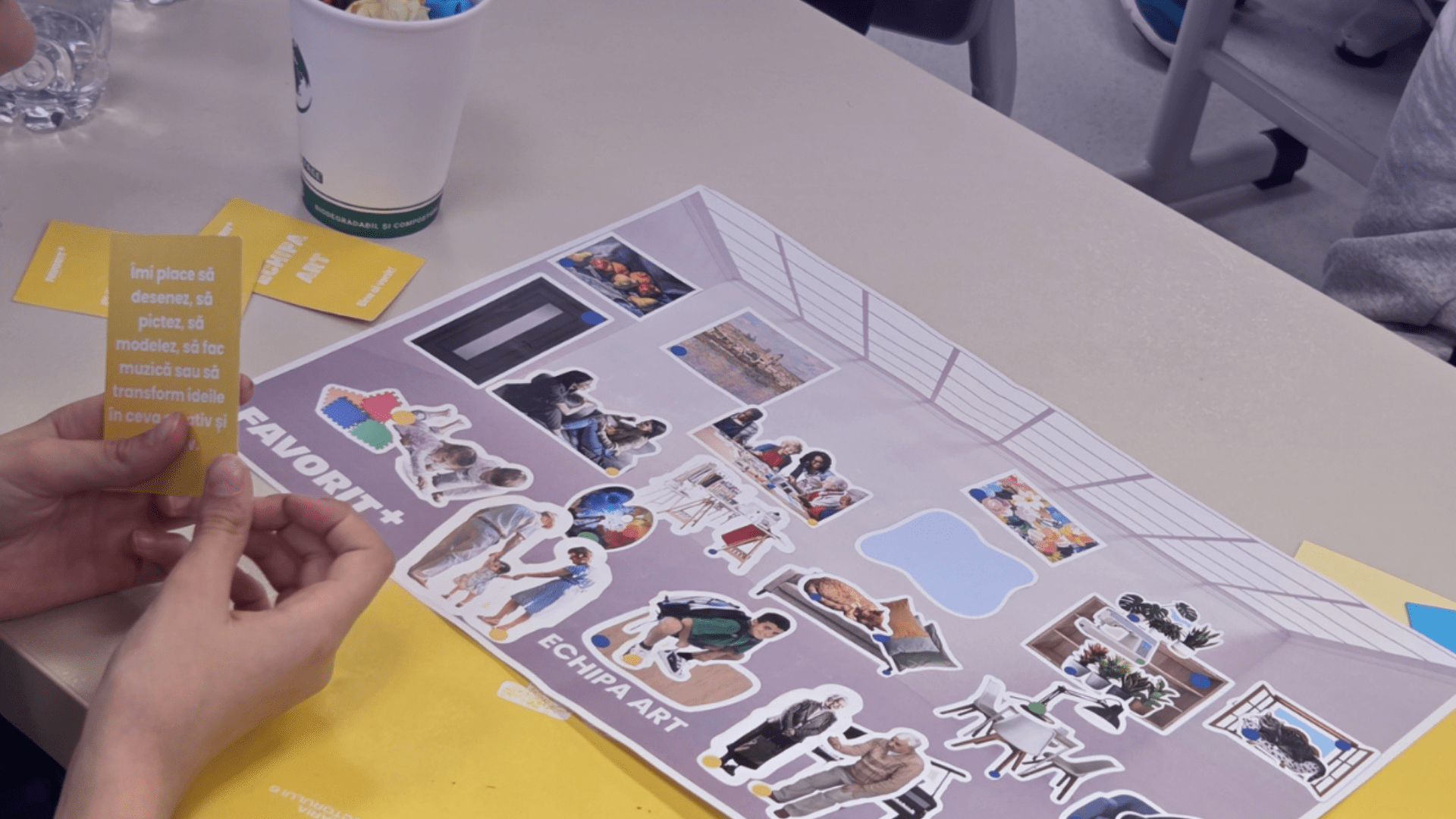
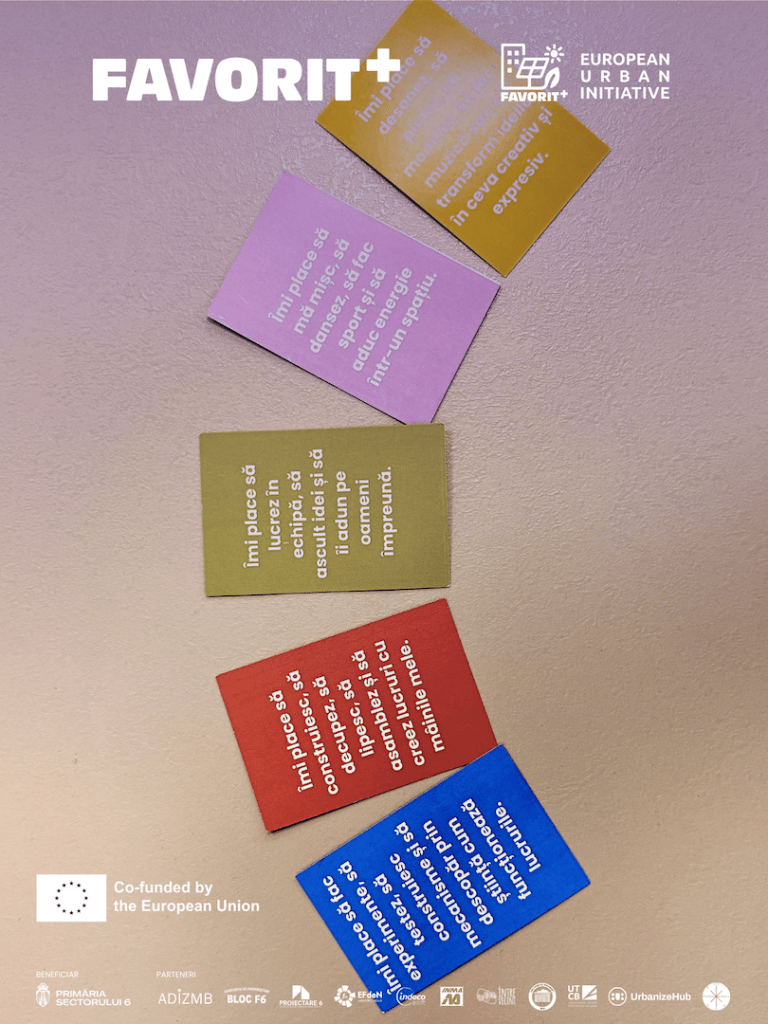
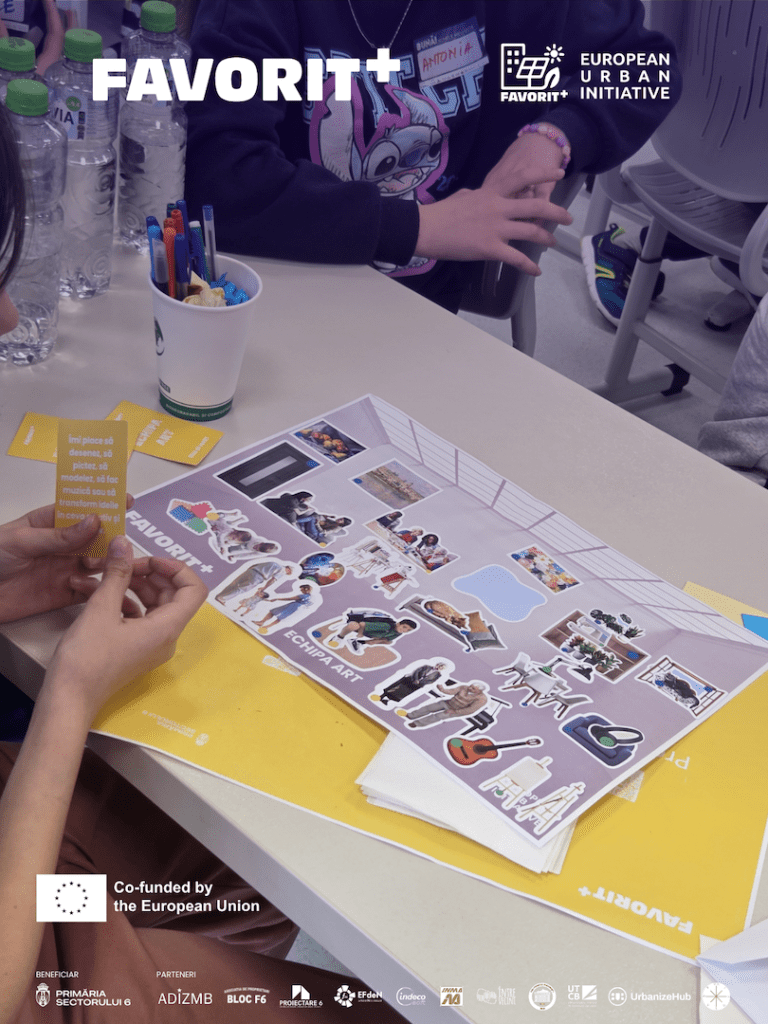
The second workshop,organised on 3 April with pupils from Orizont School,brought the perspective of children and young people into the process, as potential direct users of the future centre. The methodology was adapted to the age of the participants and combined teamwork exercises, simplified plans of the hub and a tool inspired by the logic of the New European Bauhaus, structured around the categories together, sustainable and beautiful. The pupils were organised into six thematic teams: Civic, Art, Craft, RoboLab, Rhythm and Play.
The workshop with pupils started from the activities they currently practise or would like to practise in their free time. Their answers included dance, drawing, music, robotics, board games, chess, foreign languages, gardening, martial arts and meeting friends. These activities were then connected to the possible spaces of FAV-HUB: the community space, the technical workshop, the creative workshop and the event area. The results showed that pupils imagine FAV-HUB as a friendly, flexible and lively place where learning, play, creation, movement and socialisation coexist. The Civic team imagined a space for dialogue and collaborative work; the Art team, a place for artistic creation; the Craft team, a practical workshop for DIY and prototyping; the RoboLab team, a laboratory for technology and experimentation; the Rhythm team, a room for movement and dance; and the Play team, a space for relaxation and informal socialisation.
The pupils’ contribution was important not only through the activities proposed, but also through the way they described the atmosphere of the future hub. Elements of comfort, plants, relaxation areas, friendly furniture, open spaces and users of different ages appeared in almost all proposals. This perspective complemented the technical and functional dimension of the project with a clearer image of how FAV-HUB should be experienced: as an accessible, inclusive and attractive space for children, young people, families and the community.
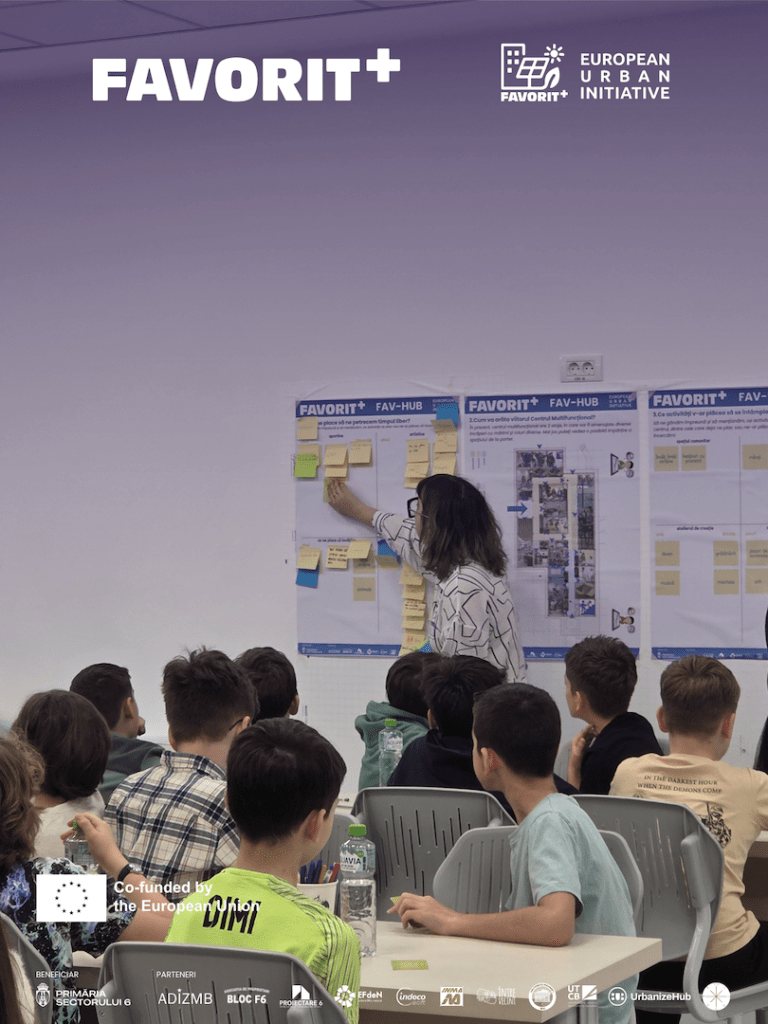
The third workshop,organised on 4 April with residents from the Favorit area,aimed to collect direct perspectives on the social, cultural and community role of FAV-HUB. Participants discussed the existing cultural and community life in Sector 6, mentioning public space activations, festivals, park activities, events for seniors, open-air cinema, guided tours, sports activities and local initiatives. The discussions showed that the current offer is visible mainly through temporary events and outdoor activations, but is less supported by stable, recurring and accessible indoor infrastructure available throughout the year.
The community highlighted the need for a stable space for recurring activities, more accessible to diverse user groups and better connected to residents’ real agendas. During the main co-creation exercise, participants proposed that FAV-HUB should be open to children, young people, adults, seniors, homeowners’ associations, local entrepreneurs, informal communities, people with disabilities and other groups that should feel welcome. The proposed activities combined cultural, social, civic and practical functions: repair workshops, exhibitions about the history of the neighbourhood, courses, activities for seniors, after-school support, accessible co-working spaces, meetings between authorities and citizens, intergenerational programmes and spaces for local initiatives.

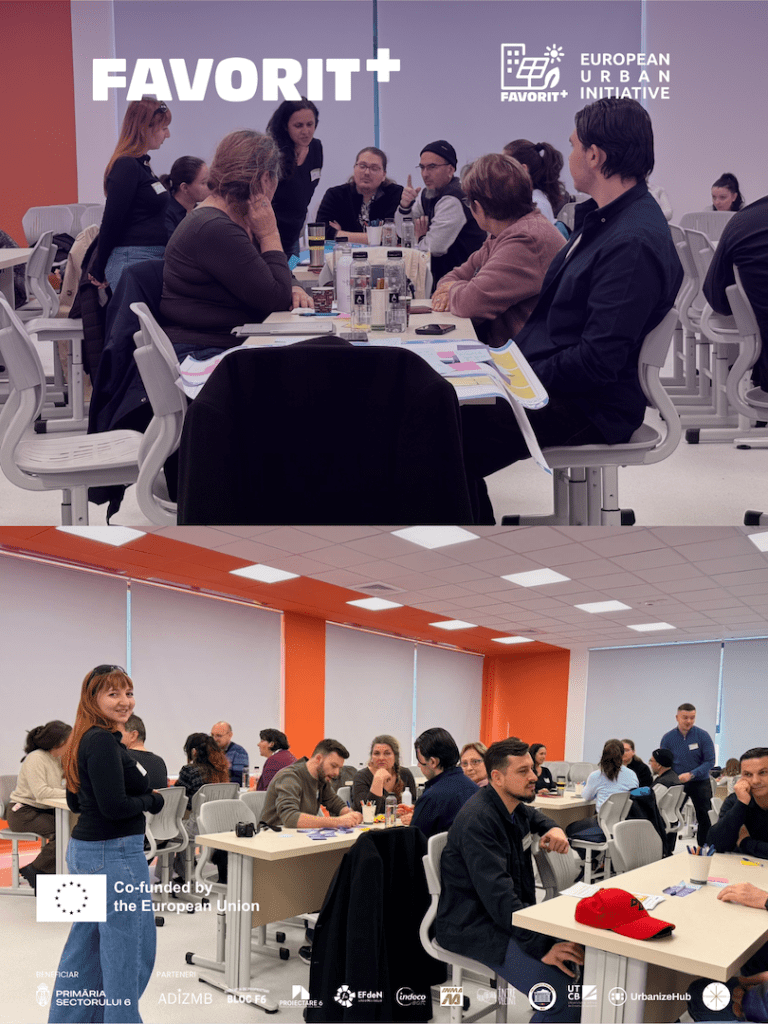
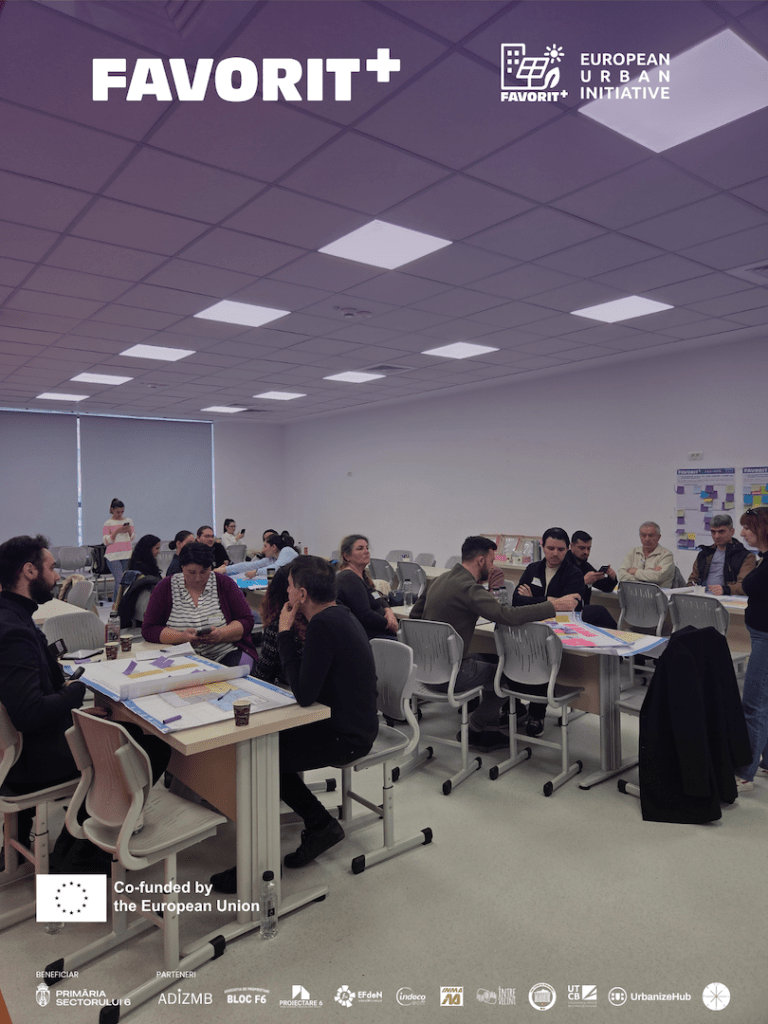
Taken together, the three consultations show a clear convergence: FAV-HUB is not perceived as a single-function space, but as a multifunctional, flexible and intergenerational centre. Urban stakeholders formulated the strategic and operational framework of the hub, pupils brought an experiential perspective on the desired atmosphere and activities, while the community more clearly defined the conditions for operation, accessibility and social relevance.
The overall results indicate four major directions for the development of FAV-HUB:the community and civic function, the educational and work function, the experimentation and knowledge transfer function, and the function of socialisation, leisure and local activation. In this way, FAV-HUB is emerging as a community agora, a sustainability laboratory, a learning space and a point of connection between residents, experts, institutions and public administration.